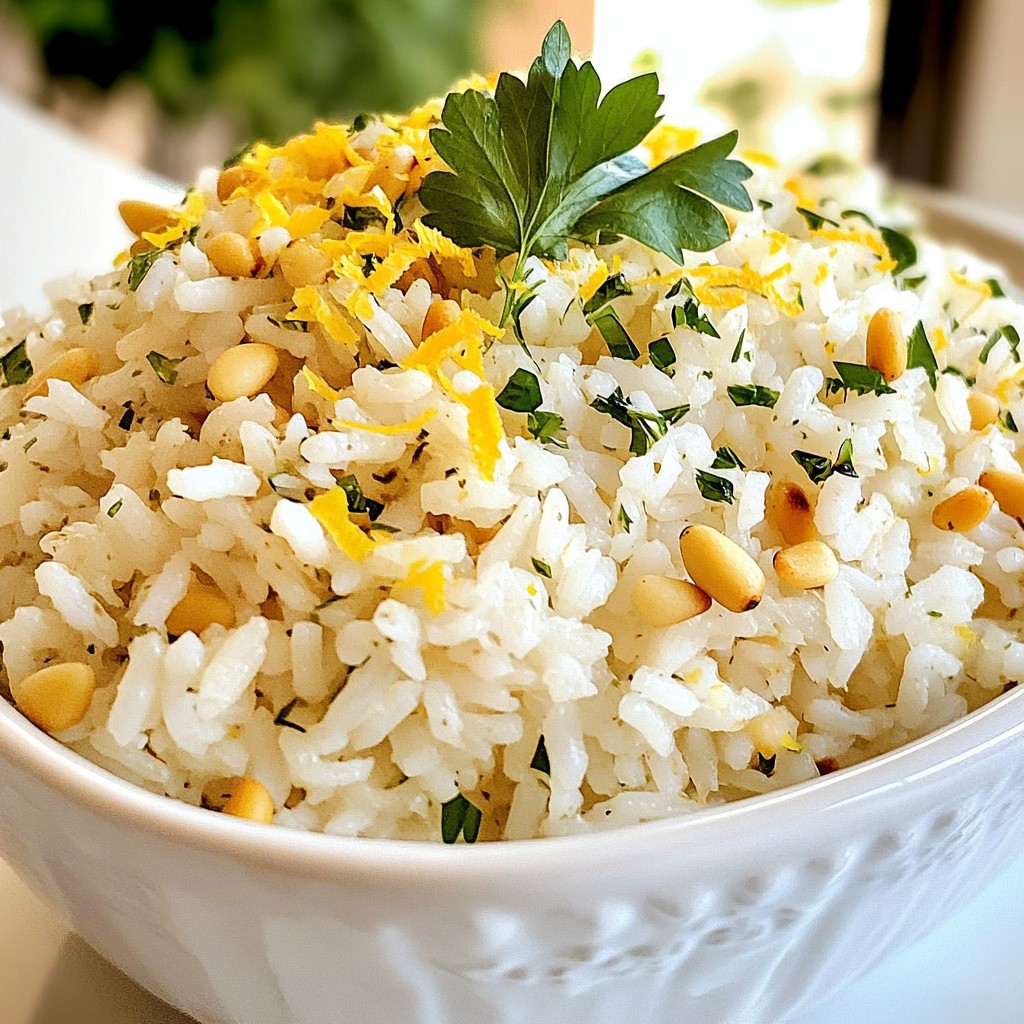
Are you ready to elevate your dinner game? This Herbed Easy Side Dish Rice with Pine Nuts is simple yet full of flavor. You can make it with just a few ingredients, and it pairs perfectly with any main dish. In this post, I’ll share my favorite steps, tips, and tricks to create rice that’s light, fluffy, and packed with taste. Let’s dive in and make a dish everyone will love!
Why I Love This Recipe
- Fresh and Flavorful: This herbed rice recipe bursts with fresh herbs and zesty lemon, making it a delightful side dish that enhances any meal.
- Nutty Crunch: The addition of toasted pine nuts adds a wonderful crunch and rich flavor that elevates the texture of the rice.
- Quick and Easy: With minimal prep time and simple ingredients, this recipe is perfect for busy weeknights or casual gatherings.
- Versatile Pairing: This herbed rice complements a wide range of main dishes, from grilled vegetables to roasted meats, making it a versatile staple in your kitchen.
Ingredients
Detailed ingredients list
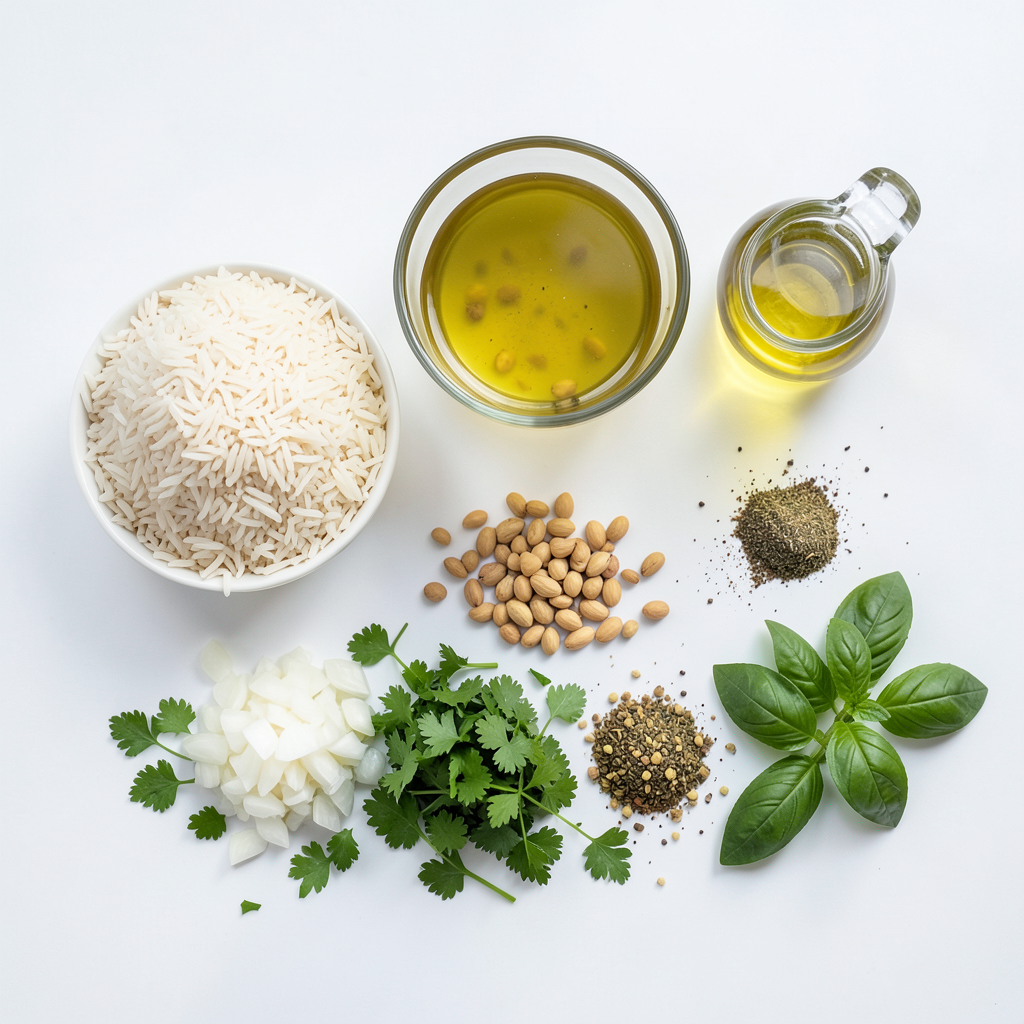
To make herbed easy side dish rice with pine nuts, you need:
- 1 cup long-grain rice
- 2 cups vegetable broth
- 1/4 cup pine nuts
- 2 tablespoons olive oil
- 1 small onion, finely chopped
- 2 cloves garlic, minced
- 1/4 cup fresh parsley, chopped
- 1/4 cup fresh basil, chopped
- 1 teaspoon dried oregano
- Salt and pepper to taste
- Zest of 1 lemon
Substitutions for key ingredients
If you lack any ingredient, don’t worry! Here are some swaps you can try:
- Use chicken broth instead of vegetable broth for more flavor.
- Swap pine nuts with walnuts or slivered almonds for a different crunch.
- You can replace fresh parsley with cilantro for a fresh twist.
- If you don’t have basil, try using thyme or dill instead.
Recommended brands or types of herbs
Choosing the right herbs enhances your dish. I suggest:
- Fresh parsley from your local market for a bright flavor.
- Look for sweet basil, which adds a lovely aroma.
- For dried oregano, choose a high-quality brand like McCormick or Simply Organic.
- Avoid pre-ground herbs, as fresh ones give the best taste.
Step-by-Step Instructions
Preparation of the rice
Start by rinsing 1 cup of long-grain rice under cold water. This step is key. Rinsing removes excess starch. It helps keep the rice fluffy and not sticky. When the water runs clear, you’re ready.
Sautéing the aromatics
In a medium saucepan, heat 2 tablespoons of olive oil over medium heat. Add 1 small onion, finely chopped. Sauté for 3 to 4 minutes. You want the onions soft and translucent. Next, add 2 cloves of minced garlic. Sauté for 1 minute, but don’t let it burn. This mix adds a great base flavor.
Cooking the rice to perfection
Now, stir in the rinsed rice. Cook for about 2 minutes to toast it lightly. Pour in 2 cups of vegetable broth, bringing it to a gentle boil. Add salt, pepper, and 1 teaspoon of dried oregano. Then, reduce the heat. Cover and let it simmer for 15 to 20 minutes. The rice will absorb the liquid and become tender.
While the rice cooks, toast 1/4 cup of pine nuts in a dry skillet over medium heat. Stir frequently for 3 to 5 minutes until they turn golden brown. This step brings out their nutty flavor.
Once the rice is done, remove it from heat. Let it sit for 5 minutes, covered. Fluff the rice gently with a fork. Finally, stir in 1/4 cup of fresh parsley, 1/4 cup of fresh basil, and the lemon zest. Don’t forget to add the toasted pine nuts! Adjust the seasoning to your taste, and enjoy your herbed rice.
Tips & Tricks
How to prevent sticky rice
To keep your rice from sticking, rinse it first. Rinsing removes extra starch. This step is key. Use cold water until it runs clear. Then, lightly toast the rice in oil. This adds flavor and helps keep grains separate. Cook it in broth for added taste. Follow these steps, and your rice will be fluffy and perfect.
Enhancing flavors with additional herbs
Adding more herbs can boost the taste of your herbed rice. Try thyme or tarragon for a unique twist. You can also use chives for a mild onion flavor. Mix and match herbs based on what you like. Fresh herbs give a bright taste, while dried herbs offer convenience. Don’t be afraid to get creative!
Toasting pine nuts correctly
Toasting pine nuts adds a rich, nutty flavor. Use a dry skillet over medium heat. Stir them often to avoid burning. Toast for about 3-5 minutes until golden brown. Watch them closely; they can burn quickly. Once done, let them cool before adding to the rice. This simple step makes a big difference in flavor.
Pro Tips
- Rinse the Rice: Always rinse the rice under cold water until the water runs clear. This removes excess starch and ensures fluffy grains.
- Toasting Pine Nuts: Toast the pine nuts in a dry skillet over medium heat, stirring frequently. This enhances their flavor and adds a delightful crunch.
- Letting Rice Sit: After cooking, let the rice sit covered for 5 minutes before fluffing. This allows it to steam and improves the texture.
- Fresh Herbs: Always add fresh herbs at the end of cooking to preserve their vibrant flavor and color.
Variations
Adding vegetables to the rice
You can make your herbed rice even better by adding vegetables. Carrots, peas, and bell peppers mix well. Start by chopping them into small pieces. Sauté them with the onion and garlic. This adds color, flavor, and nutrients to your dish. You can also use spinach or kale. Add them at the end, so they stay bright and fresh.
Using different types of nuts for flavor
While pine nuts are great, you can also try other nuts. Almonds or walnuts bring a different taste. Toast them like you did with the pine nuts. Chopped hazelnuts add a nice crunch. Each nut gives the rice a unique twist. You can even mix two or three types together for extra fun.
Herb substitutions and combinations
Don’t be afraid to play with herbs! If you don’t have parsley or basil, try cilantro or dill. Thyme or rosemary can also work. These herbs change the flavor and make the dish your own. You can also mix herbs for a more complex taste. Use equal parts of different herbs to find your favorite combination.
Storage Info
How to store leftover herbed rice
After you enjoy your herbed rice, store any leftovers in an airtight container. This keeps the rice fresh and safe to eat later. Place the container in the fridge. Leftover herbed rice will stay good for up to four days. Make sure to cool the rice first before sealing it up. This prevents condensation, which can make the rice soggy.
Reheating instructions
When you're ready to eat your leftover rice, reheating it is easy. Add a splash of water or broth to the rice to keep it moist. You can use the microwave or a saucepan. For the microwave, heat it in short bursts, stirring in between. This will help it heat evenly. If you choose the stovetop, warm it on low heat, stirring often. This ensures the rice warms up nicely without getting dry.
Freezing rice for future meals
If you want to save your herbed rice for later, freezing is a great option. First, cool the rice completely. Then, scoop it into freezer bags or airtight containers. Flatten the bags for easier storage. Label them with the date, so you know when to use them. Frozen herbed rice can last up to three months. When you’re ready to eat it, thaw it in the fridge overnight. Reheat it as mentioned above for a tasty meal anytime.
FAQs
Can I use brown rice instead of white rice?
Yes, you can use brown rice. It will take longer to cook. Brown rice often needs more water too. Use a 2:1 ratio of water to rice. Cook it for about 40-45 minutes instead of 15-20. The flavor may be nuttier and chewier.
What dishes pair well with herbed rice?
Herbed rice pairs well with many dishes. It complements grilled chicken or fish nicely. You can also serve it with roasted vegetables. For a touch of spice, try it with curries. This rice works great with a fresh salad too.
How can I make this dish vegan?
To make herbed rice vegan, simply use vegetable broth. All other ingredients are already vegan-friendly. Ensure the olive oil is pure and not mixed with any animal products. This keeps the dish light and plant-based. Enjoy the fresh herbs and nuts for added flavor!
In this blog post, I covered how to make herbed rice. You learned about key ingredients and tasty substitutions. I shared step-by-step instructions to achieve perfect rice. Tips helped you avoid sticky rice and enhance flavors. You discovered fun variations and how to store leftovers.
Remember, herbed rice is flexible and easy to adapt. Experiment with your favorite herbs and nuts. Enjoy every bite!