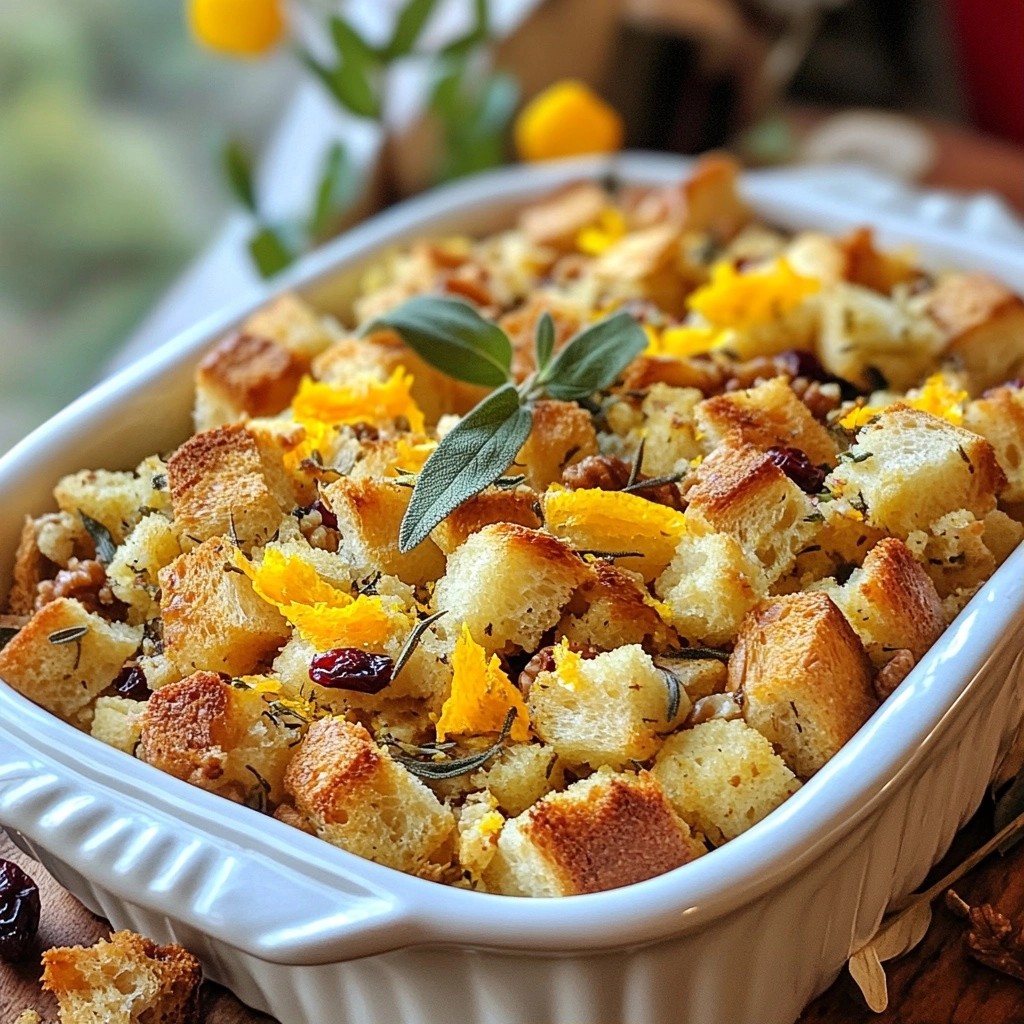
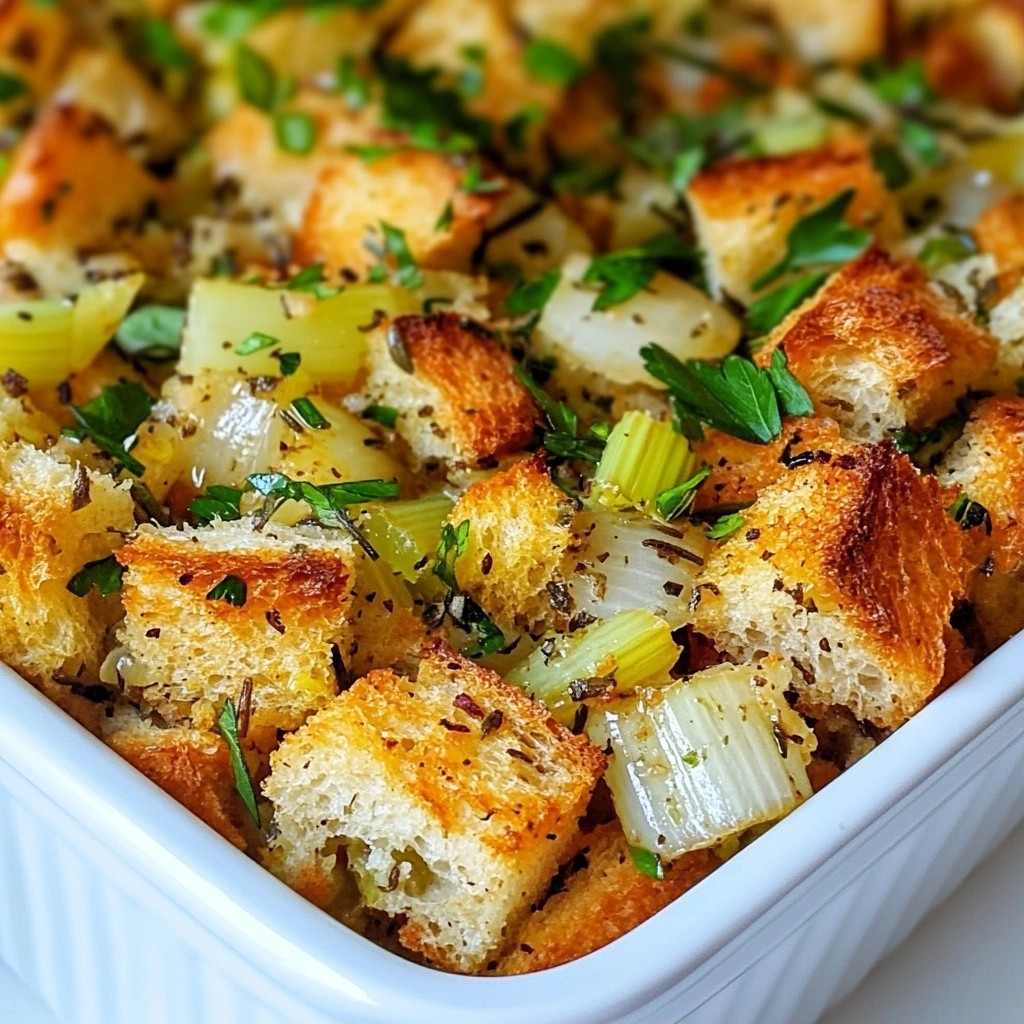
Do you want a side dish that wows everyone at the table? My Savory Easy Side Dish Sage and Herb Stuffing is just what you need! With simple ingredients like crusty bread, fresh herbs, and a touch of butter, you'll create a flavorful stuffing that fits any meal. In this post, I’ll share my easy recipe and some tips to make it perfect every time. Let’s dive in!
Why I Love This Recipe
- Delicious Flavor Combination: The blend of fresh herbs like sage, thyme, and rosemary adds a fragrant and savory depth to the stuffing that elevates any meal.
- Easy to Make: This recipe comes together in under an hour, making it a perfect addition to your holiday feast or a cozy family dinner.
- Customizable: You can easily adapt this stuffing by adding in your favorite ingredients, such as nuts, dried fruits, or different types of bread.
- Perfect Texture: The combination of crispy top and moist interior makes for a satisfying dish that complements a variety of main courses.
Ingredients
Main Ingredients
- 1 loaf of crusty bread (about 10 cups, cubed)
- 1/2 cup unsalted butter
- 1 medium onion, finely chopped
- 2 stalks celery, finely chopped
Herbs and Seasonings
- 1 tablespoon fresh sage, chopped
- 1 tablespoon fresh thyme, chopped
- 1 tablespoon fresh rosemary, chopped
Liquids and Flavorings
- 2 cups vegetable broth
- 1/2 teaspoon salt
- 1/2 teaspoon black pepper
- 1/2 cup chopped fresh parsley
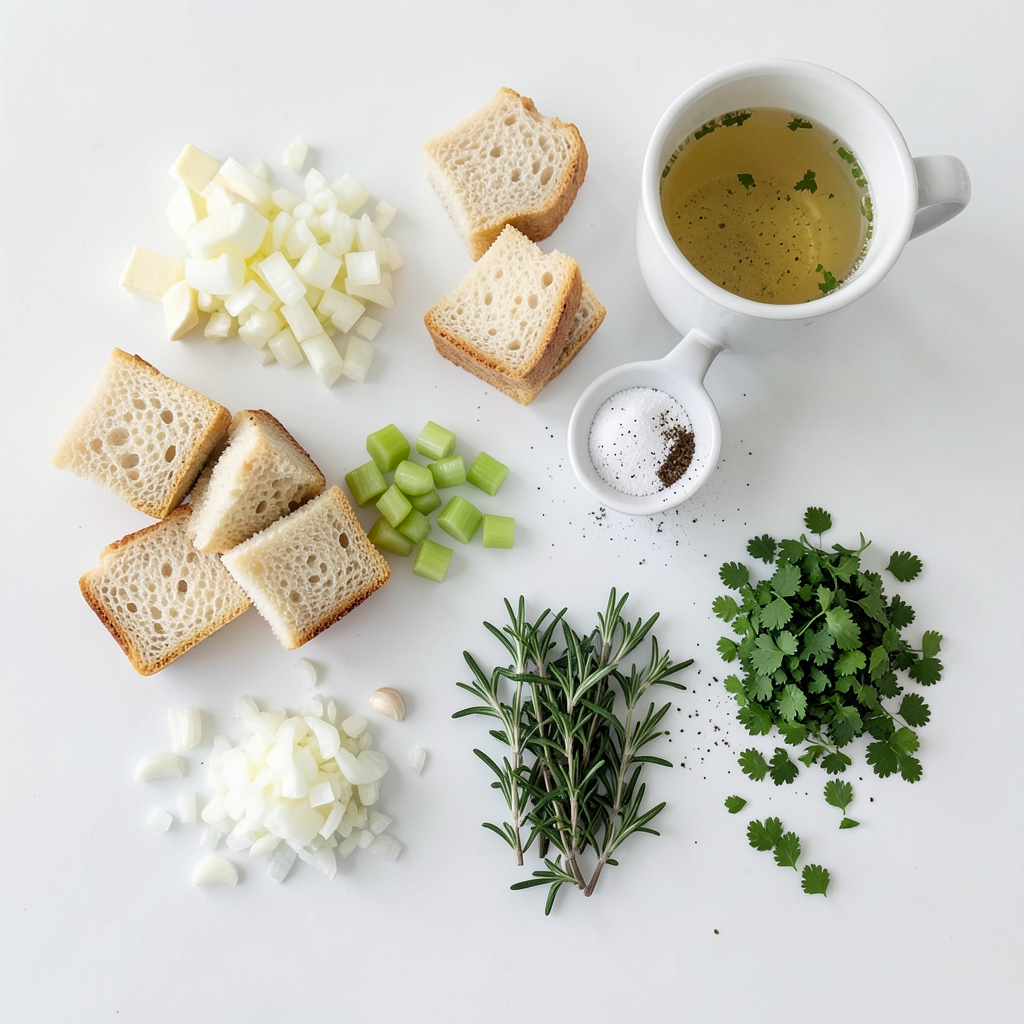
This sage and herb stuffing recipe shines with its simple yet flavorful ingredients. You'll start with crusty bread, a must for great texture. Use unsalted butter to control the salt level. The onion and celery add a savory base that brings depth to the dish.
The herbs are key here. Fresh sage gives a warm, earthy taste. Thyme adds a hint of sweetness, while rosemary brings a robust flavor. Together, they create the perfect herb blend.
Don't forget the liquids! Vegetable broth keeps the stuffing moist and adds flavor. A touch of salt and black pepper rounds out the taste. Finally, fresh parsley adds a pop of color and freshness.
With these ingredients, you can create a delicious side dish that pairs well with many main meals. Enjoy the journey of cooking this delightful sage and herb stuffing!
Step-by-Step Instructions
Prepping the Oven and Ingredients
1. First, preheat your oven to 350°F (175°C). This step warms the oven for baking.
2. Next, prepare your vegetables. Chop one medium onion and two stalks of celery finely. This helps the flavors mix well.
Cooking the Aromatics
1. In a large skillet, melt 1/2 cup of unsalted butter over medium heat.
2. Add the chopped onion and celery. Sauté them for 5-7 minutes until they soften.
3. Then, stir in four minced garlic cloves, one tablespoon of chopped sage, one tablespoon of thyme, and one tablespoon of rosemary. Cook for one more minute. This step makes your kitchen smell amazing!
Combining Ingredients
1. In a large mixing bowl, combine 10 cups of cubed crusty bread, the sautéed vegetable mixture, and 1/2 cup of chopped fresh parsley.
2. Gradually pour in two cups of vegetable broth. Mix gently until the bread is soaked but not soggy. Season with 1/2 teaspoon of salt and 1/2 teaspoon of black pepper.
Baking the Stuffing
1. Transfer the stuffing mixture to a greased baking dish. Spread it out evenly.
2. Cover the dish with aluminum foil. Bake for 30 minutes.
3. After 30 minutes, remove the foil. Bake for another 10-15 minutes until the top is golden and crispy.
4. Let the stuffing cool for a few minutes before serving. Enjoy your delicious creation!
Tips & Tricks
Perfecting Your Sage and Herb Stuffing
Bread selection tips Choose a crusty bread for the best texture. Use a loaf that is a day or two old. Fresh bread may turn mushy. Aim for about ten cups, cut into small cubes. You can mix different types of bread too. Try sourdough, ciabatta, or French bread for fun flavors.
Ensuring the right moisture level Moisture is key to great stuffing. You want the bread cubes soaked but not soggy. Pour in the vegetable broth slowly. Mix gently as you add it. If it seems too dry, add more broth. If it’s too wet, add more bread cubes.
Flavor Enhancements
Additional herbs and spices Boost the taste with more herbs. Consider adding parsley or oregano. A sprinkle of red pepper flakes adds a nice kick. You can also try thyme or marjoram. Taste your mix before baking to adjust flavors.
Adding nuts or dried fruits For a unique twist, mix in chopped nuts or dried fruits. Walnuts or pecans add crunch. Dried cranberries or apricots give sweetness. These additions make your stuffing special and fun. Don’t be afraid to experiment with your favorite flavors!
Pro Tips
- Use Day-Old Bread: For the best texture, use day-old bread as it will absorb the broth better without becoming mushy.
- Herb Variations: Feel free to experiment with different herbs like oregano or basil to customize the flavor to your liking.
- Add Nuts or Dried Fruits: For added texture and flavor, consider mixing in some chopped nuts or dried fruits like cranberries or apricots.
- Make It Ahead: You can prepare the stuffing a day in advance. Just cover it tightly and refrigerate, then bake it when ready to serve.
Variations
Gluten-Free Option
You can easily make this stuffing gluten-free. Just swap regular bread for gluten-free bread. Use your favorite brand to ensure great taste. Look for bread that is crusty and can hold moisture well. This will give you a similar texture and flavor. You can enjoy this dish without worry!
Adding Proteins
Want to make your stuffing heartier? Add proteins like sausage or bacon. Brown them first in your skillet before adding to the mix. This step gives the stuffing a rich flavor and a nice texture. Chopped cooked sausage or crispy bacon bits blend perfectly with the herbs. It makes the dish even more satisfying and delicious.
Vegetarian Add-Ins
If you prefer a veggie twist, try adding mushrooms or carrots. Finely chop these veggies and sauté them with the onion and celery. Mushrooms bring an earthy flavor, while carrots add a touch of sweetness. Both options enhance the stuffing's texture and taste. You can create a colorful and tasty side dish that all will love!
Storage Info
Storing Leftovers
To keep your sage and herb stuffing fresh, place it in an airtight container. Make sure it cools down to room temperature first. Store it in the fridge for up to four days. If you want to enjoy it later, follow the freezing tips below.
Reheating Instructions
When reheating stuffing, I recommend using the oven. Preheat your oven to 350°F (175°C). Spread the stuffing in a baking dish. Add a splash of vegetable broth to keep it moist. Cover it with foil and heat for about 20 minutes. For a crispy top, remove the foil for the last 5 minutes.
Freezing Tips
To freeze sage and herb stuffing, let it cool completely. Place it in freezer-safe bags or containers. Squeeze out as much air as possible to avoid freezer burn. You can freeze it for up to three months. When ready to eat, thaw it overnight in the fridge before reheating.
FAQs
How can I make this stuffing ahead of time?
You can make this stuffing a day before. Prepare it as usual, but do not bake it. After mixing, cover it tightly. Store it in the fridge overnight. Before baking, let it sit out for about 30 minutes. This helps it warm up. Then, bake as directed.
Can I use dried herbs instead of fresh?
Yes, you can use dried herbs. Use one-third of the amount of fresh herbs. For example, if the recipe calls for one tablespoon of fresh sage, use one teaspoon of dried sage. Dried herbs are more potent. So, adjust your taste as needed.
What do I serve with Sage and Herb Stuffing?
This stuffing pairs well with many dishes. Serve it with roast chicken, turkey, or pork. It also goes well with a rich gravy. For a vegetarian option, serve it with baked squash or a hearty vegetable stew.
How long will leftovers last in the fridge?
Leftovers will last for about three to four days in the fridge. Store them in an airtight container. If you want to keep it longer, consider freezing. It can last up to three months in the freezer.
In this post, we explored making sage and herb stuffing, focusing on key ingredients like crusty bread, butter, and fresh herbs. I shared step-by-step instructions to ensure a tasty dish. Remember to adjust flavors with herbs and consider variations for preferences. Storing and reheating your leftovers properly maximizes enjoyment. With these tips, you can create a stuffing that stands out at any meal. Enjoy the flavors and make it your own!